The Music Site The Subscription Site Join The Mailing List Buy via iTunes Buy via Amazon Follow on Twitter Matthew on Facebook

Archive for the ‘Blog’ Category

Why Agencies Need Indie Music

Wednesday, March 3rd, 2010

ShoestringAs musicians, most of us just want to write our brooding love ballads or electric tuba concept albums and have people line up around the block to buy it. While we’re waiting for that to happen, though, there are plenty of marketing agencies making ads, promos, and campaigns that absolutely need original music.

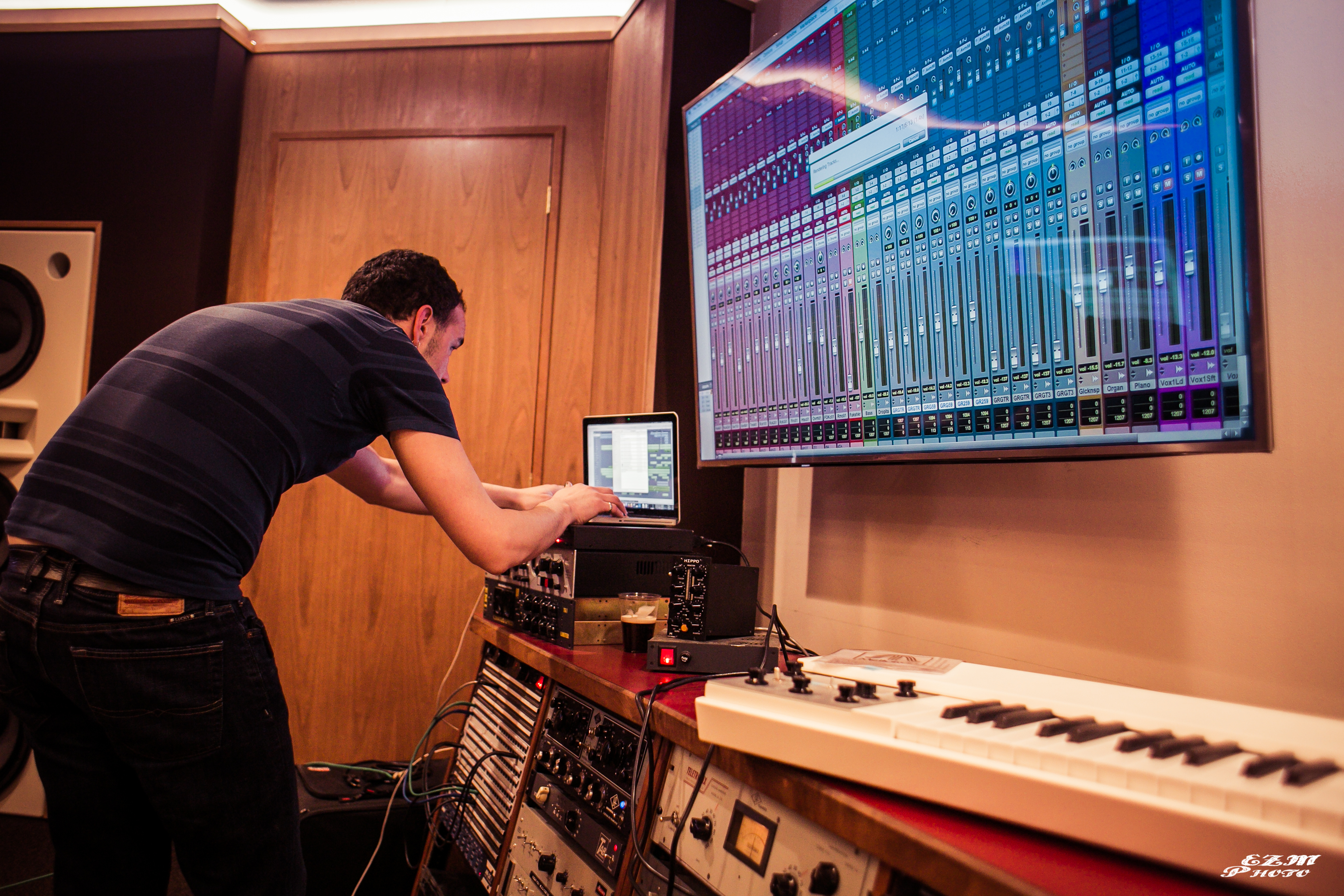
On that note, Creative Directors and agencies are facing budget cutbacks that would make a public librarian shudder. In fact, most of the people I worked with back in 2007 had to jump ship to other companies as their budgets sank with the stock market. Musicians like me that run small, professional-grade studios are a Godsend for these folks. In the past, small budget meant weak sound, but there is enough power in an iMac with Garageband to create truly compelling albums. Imagine what a guy like me can do with his own independent studio.

My Name is Matthew Ebel, and I Produce Audio

That’s right, I make more music than you can find here or at Matthew Ebel dot net. I’ve done behind-the-scenes work for Coca-Cola, Porter Novelli, Bigelow Tea, and more. If you think I only write about robots and ninjas, believe me there’s a lot more going on here. Check out some of the stuff I’ve done for business clients in the past:

The Down & Up Theme for the Depression is Real Coalition

Life is Ikea for an internal pitch by Porter Novelli (This was my first attempt at something like this. Ah, those were the days.)

There is plenty more where that came from at matthewebel.com/worksforhire – If you’re intrigued at all, I’ve got a Demo Reel here:
Producer Highlights

Why This Works For Me… AND Creative Directors

Why pay a big studio tens of thousands of dollars for a 30-second clip that could be done just as well by an independent artist at half the cost? It’s a match made in heaven, the only real difficulty is making that match in the first place.

I’ve been able to establish myself with these companies as a guy who can get the work done in record time, but I’d love to hear how other musicians and producers pair up with agencies. Whether you’re the Creative Director or the musician, what’s worked for you?

Photo by Psyberartist

EBC 2010: Let It Snow!

Tuesday, March 2nd, 2010

Some conventions are for the über-social. Some for the geeks that rarely see daylight. Some are invite-only ski trips for those of us that are simply better than you.

If anyone asks me why I moved from Nashville, the Music City, up to the frigid northeast, this is my answer. This is what I live for when it drops below camping temperature. I’m just so glad that I have friends like these that enjoy highway speeds on thin planks of wood and fiberglass.


Photography by myself and RoninOtter, edited by RoninOtter.

Why I Am Leaving Sellaband

Monday, March 1st, 2010

After fielding some questions and comments about the death, resurrection, and uncertain future of Sellaband, I felt the need to clarify why a modern artist really doesn’t need microfinancing of any kind. Especially microfinancing that’s badly managed to the point of declaring bankruptcy. The easiest way to cover this is a simple comparison between Sellaband and my own subscription service, Matthew Ebel dot net. Of course, by “my subscription service”, I mean “what any artist can offer direct to their fans”.

What Sellaband Offers Matthew Ebel dot net
Artists can ask their fans for album funding. I get funding directly from my fans on a monthly/yearly basis.
Believers are promised one new album once $15k (or whatever) is reached, if ever. I already give my subscribers 2 new songs, fully produced, every single month.
If the target is ever reached, an artist can hire a professional studio, engineer, and producer. For as little as $5,000 I can buy better equipment and hire a professional engineer in my own studio.1
If the target is ever reached, believers get one album (retail value $10) from their artist. Every year my subscribers get one or two albums’ worth of new material and, depending on the subscription level, stickers, mugs, shirts, etc.
Sellaband holds onto believers’ money until the artist’s goal is reached, if ever. If they disappear, so does the money. Subscribers’ money goes directly into better studio equipment, goodies for the annual goodie bags, the annual Beer Bash, touring, rent, food, etc. with no one holding the money hostage.
Sellaband charges a percentage to handle the money, on top of anything PayPal takes. PayPal is the only middle man taking a cut, and even that may change soon.
Believers may, if the artist allows, share in revenue generated from the album if it is ever produced. Subscribers can use affiliate links to share in revenue from referrals for as long as they stay subscribed.

I’m sure there are other comparisons to make, but frankly this was enough for me. What it all boils down to is one simple equation:

If every fan who bought a Part via Sellaband spent the same money on a Matthew Ebel dot net subscription instead, I would be able to make much better music and they would get music and goodies immediately.

This is true for any artist, not just me. It’s why I’m leaving Sellaband, and it’s why I think artists should take a much more critical look at micro-financing schemes before jumping on board with them.

1 – Don’t ask “what if I don’t own a studio?” All of the gear I use right now, including the MacBook, cost me less than $6,000 and some of it is unnecessary for a band on a budget. I recorded “Beer & Coffee” in a dining room with Apple’s Garageband and “Goodbye Planet Earth” in my bedroom.

My Video Studio Setup

Thursday, February 25th, 2010

I get a lot of requests for more information on my UStream setup, specifically from other musicians and video producers just starting out. They watch my show and ask me how I get the quality that I do. To be honest, I’m making this up as I go along. For those that are just starting out, however, here’s how I’ve set up my show:
(more…)

The iPad in My Home Studio

Tuesday, February 16th, 2010

The thought occurred to me the other day that the iPad could be indispensable for home recording studios. Whenever a vocalist needs to record, they’re typically locked in a sound-proof vault while the engineer works the controls back where the computer desk is.

But what if I’m the only one in my studio?

The Old Way

Until now the only options have been hardware control surfaces like the $1,200 Mackie units that act like a full-featured mixer or boutique wireless units like the Frontier Designs Tranzport. The latter is really the only thing I could bring into a vocal booth with me. If you take a good look at the controls on this thing, you’ll notice a lot of it is hard-wired to buttons. If I wanted to create a few more vocal tracks or select takes while I’m tracking vocals, I’d have to keep leaving the booth. And this thing costs $200. If I want anything else, I’d have to run a cable all the way into the booth and I’d still be limited to the buttons and functions the manufacturer thought I’d want.

iPad

The New Way

Now imagine I’m sealed into the mic bunker with an iPad and VNC. A device with no moving parts (read: vewy vewy quiet), a huge touch screen, and the ability to control absolutely every knob, slider, menu, and button that my recording software has to offer. If I’m recording vocals and suddenly realize that the tremolo on the guitar amp is making it difficult to stay on rhythm, I can shut it off without leaving the creative space. I can select the good takes to keep in my ears while I lay down harmony tracks. I can pull up lyrics or lead sheets as a PDF from my computer or on the iPad itself while I sing. Hell, if I’m feeling particularly masochistic, I could edit MIDI tracks by hand and tweak reverb settings from the comfort of my padded chamber.

When I’m performing my weekly UStream show, the iPad could let me control the chat room and broadcast console without taking CPU power away from my performance machine, the MacBook. But that’s another blog post, I’m sure.

Oh yeah, and it’s a frickin’ iPad too. When I’m out of the studio, I’ve still got games, books, music, movies, etc.

When I first saw the iPad’s launch, I was underwhelmed. Now, stacking it up next to current-model control surfaces, I can’t see myself buying anything else for in-booth control. I know this won’t make much of a difference to the general public, but for guys like me it opens up a world of possibilities. I need to save some money for two pieces of control gear: One bigass Mackie mixer for the desk, one iPad for everything else.